Ryōi Shintōkai
良移心当会
Are there traditional weapons in Ryōi Shintō-ryū (良移心当流) ?
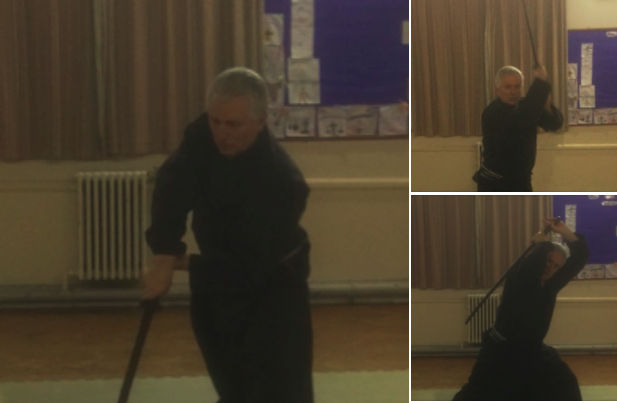
I was recently asked, do we have traditional weapons in Ryōi Shintō-ryū (良移心当流) ? The answer is yes.
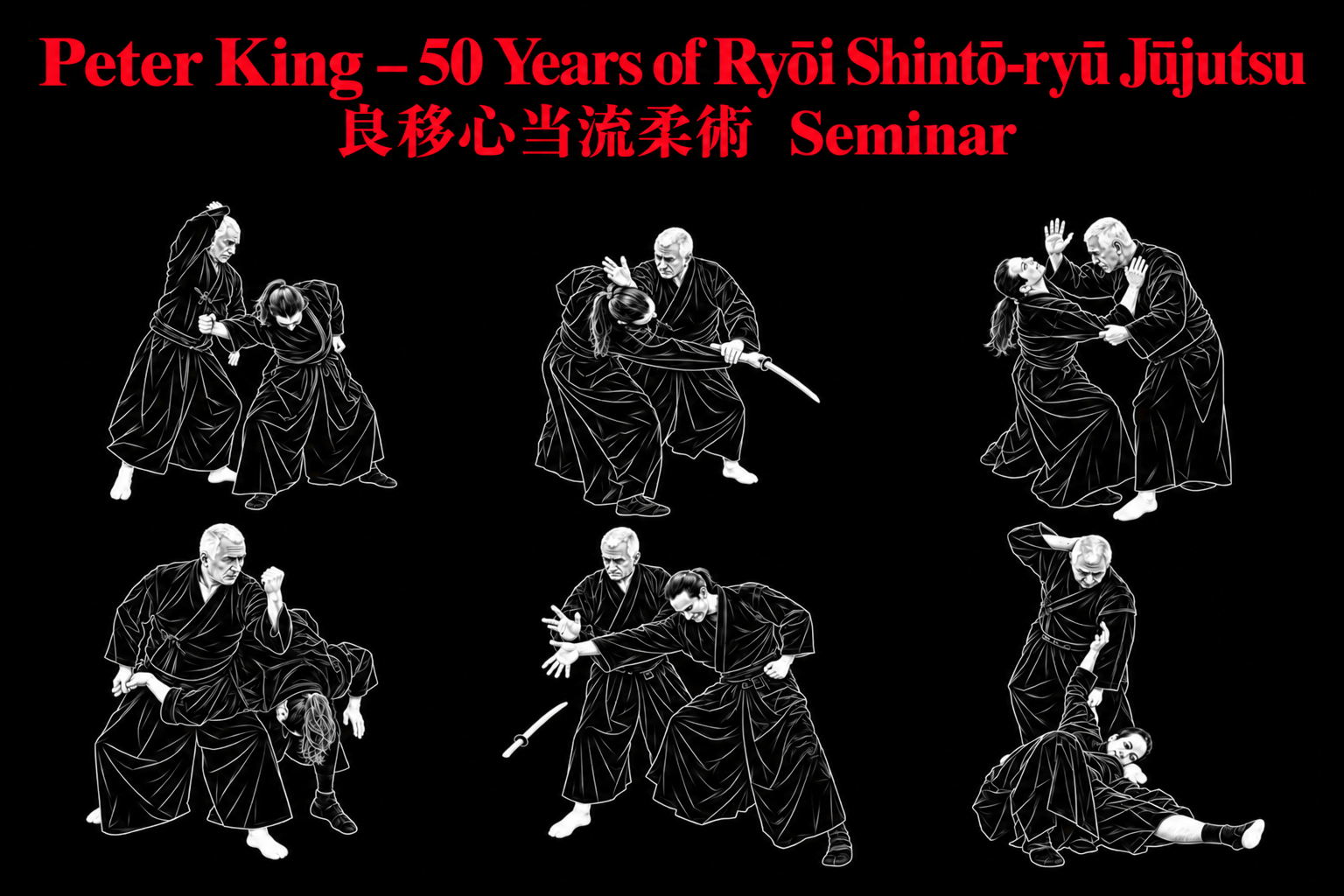
There are a variety of traditional weapons that would have been used at different ranges of engagement. Included within these are the techniques of:
• Kenjutsu (剣術), Kodachi-jutsu (小太刀術) & Tantō-jutsu (短刀)
•. Shuriken-jutsu (手裏剣術)
• Battō-jutsu (抜刀術), Iai Nuki (居合抜)
• Bōjutsu, (棒術), Jōjutsu (杖術) & Hanbōjutsu (半棒術)
• Sōjutsu (槍術) & Naginata-jutsu (薙刀術)
• Kusarigama-jutsu (鎖鎌術) & Manriki kusari-jutsu (萬力鏈術)
In the ‘Shūkaroku/Tōkaroku’ (拾華録) it states that: “The Ryōi Shintō ryū makes use of Kumiuchi (組討 – grappling), Atemi (当身 – striking) and Tantō (短刀 – short blade) techniques”.
In his book ‘Nihon no Budō Jūjutsu Jūnō Seigō no Dō’ (日本の武道 柔術 柔能制剛の道 ) Oshimatsu (1983) describes Ryōi Shintō-ryū (良移心当流) as a being a "Sōgō-bujutsu no ketsujitsu“ - i.e. a comprehensive martial art of achieving success.
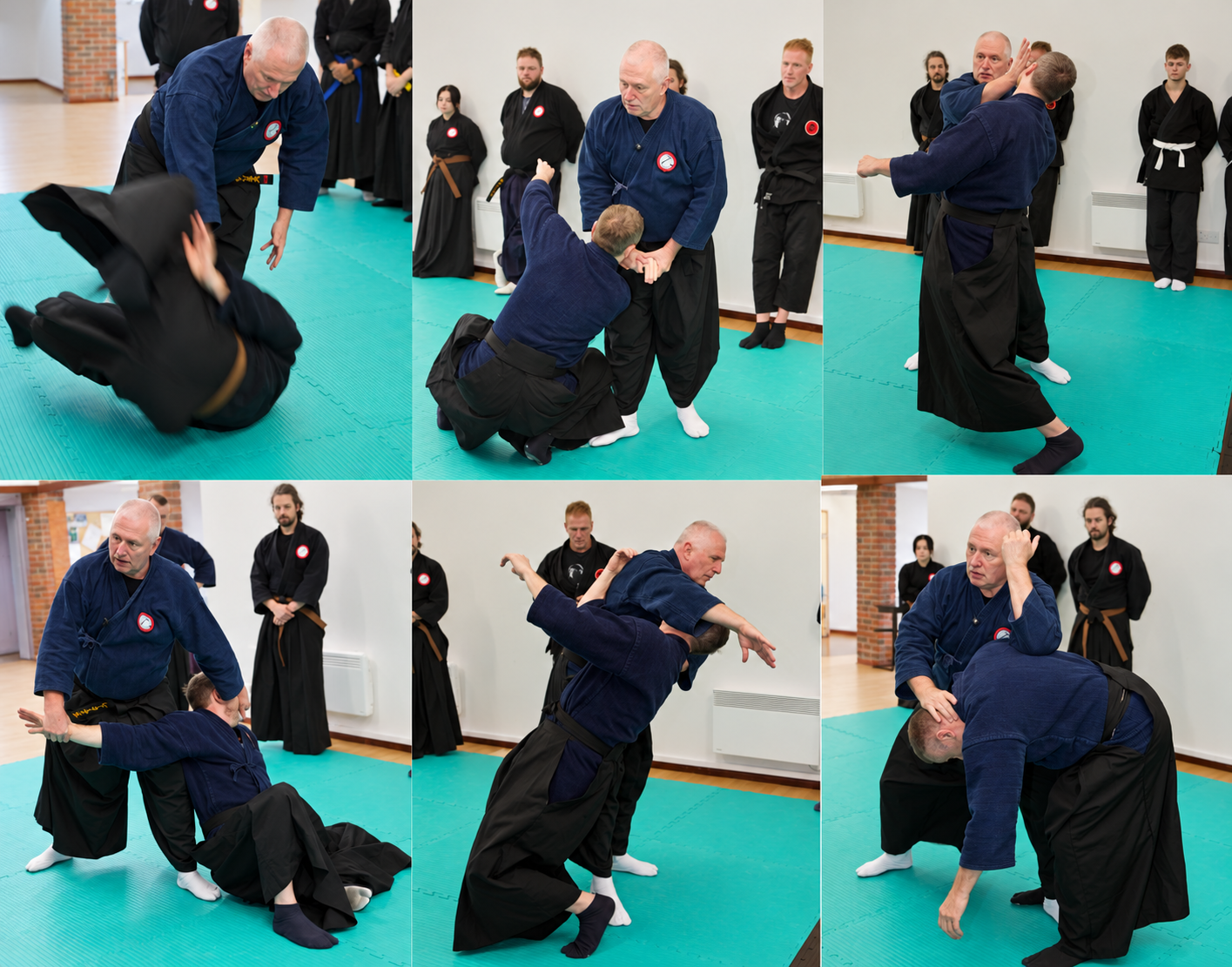
While Ryōi Shintō-ryū use a range of different weapons and it also uses weapons at different ranges. However, the core of the movement and the principles that are applied come from the body-mechanics in the primarily unarmed Jūjutsu aspects.
A friend of mine in Japan practices Yagyū Shinkage-ryū and they begin with the sword and then eventually come to Mutō dori (無刀捕 - lit. no sword capture) and of course there is a logic to that.
Taijutsu (体術 – body art) based martial arts such as Jūjutsu (柔術) work from a different rationale. First, they developed and prioritised natural body management skills and an understanding of timing, distancing, balance breaking, angles of attack and how to exploit the opponents body weaknesses. Then when weapons were used, they were employed using those body skills and principles, together with specific strategies appropriate to the design and distance of those weapons.
The additional benefit of understanding such weapons is found in familiarity with the range and potential of such weapons. This is an important aspect of Maii (間合い - distance). The Kusarigama (鎖鎌 - sickle and chain) is an important in gaining that understanding because it is a composite weapon and as such can be used in different ways across several different ranges. It can first be used at a disengaged range, where the ball at the end of the chain is used as a projectile, through intermediate ranges, to grappling range, where the chain, blade, hand-guard and shaft can be used against an opponent.
That is not to say that Jūjutsu would always have been unarmed. 'Kakushi Buki' (隠武器 - hidden weapons) would have been used in early Edo period (江戸時代) Kumiuchi (組討 - grappling) and Battō-jutsu (抜刀術 - drawing a sword), or Iai Nuki (居合抜 - drawing & cutting) used during the later Edo period Jūjutsu. There are specific mokuroku (目録 - catalogues of technique) that cover those later aspect of Ryōi Shintō-ryū.
In respect of these aspects of our school, I am both fortunate and honoured to have been awarded Hachidan (八段 - 8th dan) rank and Kyōshi (教士) title in Kobujutsu (古武術 – old martial arts / weapons) by the 'Zen Nihon Sōgō Budō Renmei’ (全日本総合武道 連盟 – All Japan Budō Federation) based in Kyoto, Japan. Rather than being a personal accolade, I believe that this is a testament to the Ryōi Shintō-ryū and to the teachings of James Shortt Sensei.