
Ryōi Shintōkai
良移心当会
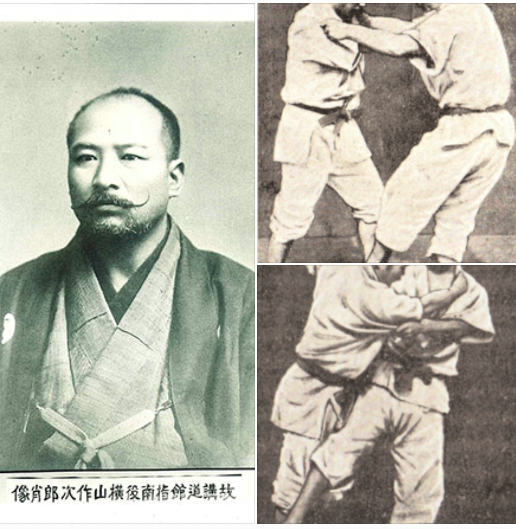
Ryōi Shintō-ryū - Kakutō (格闘) & Kōsoku (拘束) with reference to Yokoyama Sakujirō's book 'Jūdō Kyōhan'
In basic terms, Ryōi Shintō-ryū Jūjutsu (良移心当流 柔術) is divided into two different components (subject to the needs of the situation) and two types of technique within each, as follows:
Kakutō (格闘) - Combat, comprising of:
Atemi waza (当身技) – Striking
"Using the body as a point of impact against an opponent. Selecting the target for its vulnerability and the weapon for its durability."
Nage waza (投技) – Throwing
"Using other than the body as a point of impact against an opponent, relying primarily on techniques of projection."
and
Kōsoku (拘束) - Restraint, comprising of:
Kansetsu-waza (関節技) - Joint locking
"Restraining an attacker through the application of over-extension and, or torsion to one, or more joints of the body."
Shime waza (絞技) – Constriction (incl. Osae waza 押技- pinning)
"Restraining an opponent through the application of direct, or indirect pressure. Indirect pressure involves methods of encirclement and direct pressure involves methods of pinning."
The previous Jūjutsuka and then Kōdōkan Jūdō (講道館 柔道) champion Yokoyama Sakujirō (横山 作次郎) is probably best know for his 55 minute match against Ryōi Shintō-ryū Jūjutsuka – Nakamura Hansuke (中村 半助) in 1886. As neither man could prevail, the match was stopped by the referee Hisatomi Tetsutarō (久富鉄太郎) and declared a draw.
I have included Yokoyama's explanation of throwing (Nage waza - 投技) & Striking (Atemi waza - 当身技) as excerpts from his 1908 book 'Jūdō Kyōhan' (柔道教範)
Nage waza (投技)
"…Generally speaking, the human body consists of soft and elastic muscles and many rigid bones with flexible joints. In ordinary cases the body is very flexible, but when thrown, it generally grows stiff as a stick instead of flexible. In most cases, the reason of the body being thrown is just the same as that of a falling stick."
Atemi waza (当身技):
"Every kind of atemi-waza is performed by striking, poking, or kicking your antagonist. It must be remembered that you should always bring back to its original position your foot with which you have kicked him, and not leave it where you kicked him. The same is the case with your fist, elbow, or knee with which you poke or strike him. This is very important. If you do not do so, it would have little effect, even if you hit the right place. These tricks may be applied whether your antagonist is standing or lying."
The person performing the two throwing techniques (Ko-uchigari & Ashiguruma) is Samura Kaichiro (佐村嘉一郎), who was the son of Samura Masaaki (佐村正明) of the Takeuchi Santō-ryū (竹内三統流), whom Nakamura beat in match in 1887.


