
Ryōi Shintōkai
良移心当会
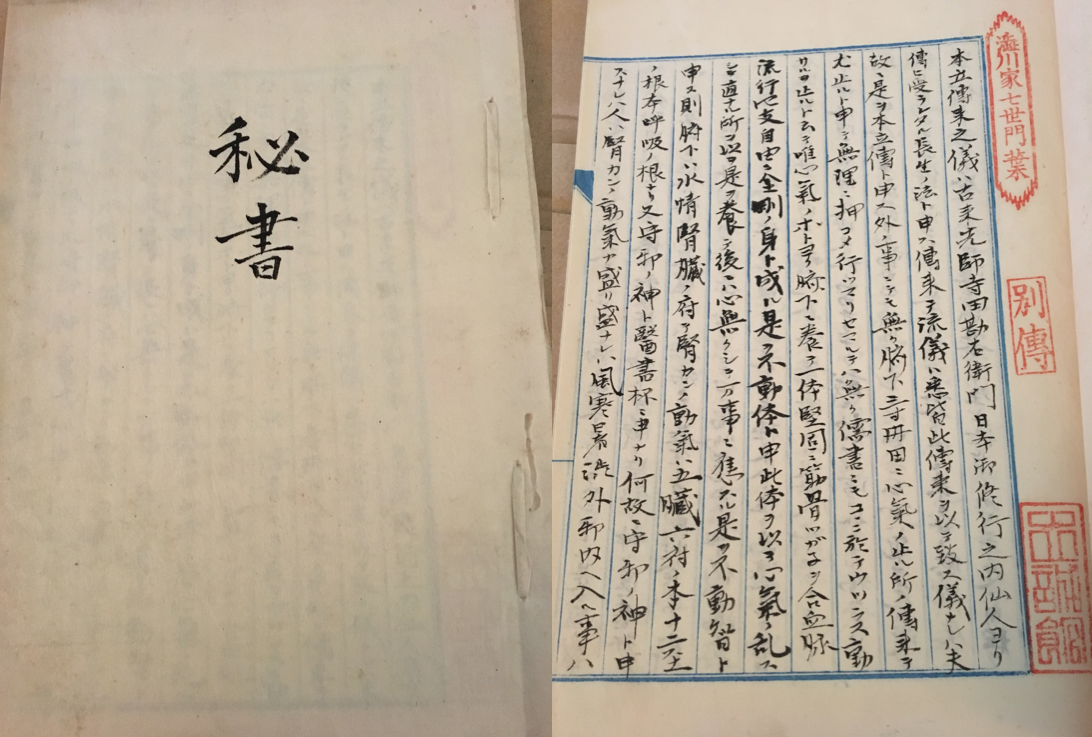
Jikishin-ryū Hisho (直信流 秘書 - Secret Document)
Whilst in Japan in 2017, I obtained a Jikishin-ryū (直信流 ) Hisho (秘書 - Secret Document) densho (as above).
I have also included the Jikishin-ryū entry from Serge Mol's book 'Classical Fighting Arts of Japan: A Complete Guide to Koryu Jujutsu' (2001):
"The founder of the school was Terada Kanemon Masashige (1616 – 1674), later called Terada Kanemon Mitsuhide, a retainer of Matsue domain in what is now Shimane Prefecture. Mitsuhide’s grandfather, Terada Heizaemon Sadaysu, was the founder of Teishin Ryū (also known as Gunjin Kumiuchi Teishin Ryū and Teishin Ryū Gunjin Yawara). Mitsuhide studied under both his grandfather and his father, Terada Hachizaemon Yorishige, who had trained under Kitō Midare Ryū’s founder Ibaraki Sensai and Ryōi Shintō Ryū’s founder Fukuno Shichirōuemon Masakatsu, as well as under his grandfather Terada Heizaemon Sadaysu. Later Mitsuhide succeeded his father, Terada Yorishige, and became grandmaster of the Kitō Midare Ryū. He also developed his own system, which he called Jikishin Ryū Yawara (sometimes also called Jikishin Ryū Yawara Jūjutsu).
Mitsuhide’s successors continued along two lines: the Kitō Ryū line and the Jikishin Ryū line. The Jikishin Ryū was continued in Matsue domain and would become the forerunner of Jūdō. However, it was probably not until 1724, under Inoue Jibudayū Masayori, the fourth grandmaster of the Jikishin Ryū, that the name would change to Jikishin Ryū Jūdō. The kanji for Shin was also changed (and thus the name changed .... to 直信流) ………
….. However, a closer look at the Jūdō Wazajutsu Dai Mokuroku reveals that the curriculum of the Jikishin Ryū was probably not limited to empty-handed techniques. The curriculum listed in this mokuroku contains three main section, and includes a total of ninety-seven techniques. The names of some of the subsections (kogusoku and tachai) indicate that this ryūha also included a number of wakizashi (short sword) and sword techniques."


